Quality Craftsmanship Starts With the Right Fencing Team
Enclose Swimming Areas and Pool Decks With Pool Fence Installation in McDonough, GA
Create a defined barrier around your swimming area with fencing planned for your pool layout, access needs, and outdoor style. Backed by over 40 years of combined fencing experience.
Create a Clear Boundary Around Your Swimming Area
A swimming pool can become a favorite gathering place, but an inadequately planned boundary may leave the area too accessible or difficult to manage. An open route from the backyard to the water, an inconvenient gate, or deteriorated fencing can create concerns for property owners and visitors. Decorative fencing selected without considering pool barrier requirements may have unsuitable openings, insufficient height, or gate hardware that does not meet applicable standards. A poorly positioned enclosure can also interfere with walkways, maintenance equipment, landscaping, and regular use of the pool deck. When safety considerations and everyday access are treated as separate decisions, the resulting fence may not serve the swimming area as intended.
Hamrick Fence provides pool fence installation in McDonough, GA, for homeowners seeking defined swimming-area boundaries that complement their outdoor spaces. We begin by discussing the pool’s location, surrounding structures, preferred fence appearance, and the routes people use to enter or leave the area. Our team then helps you explore suitable fencing materials, enclosure layouts, and gate configurations while identifying requirements that must be confirmed before installation. Since 2002, we have emphasized clear communication, honest pricing, and careful craftsmanship supported by over 40 years of combined industry experience. Contact us today to discuss a pool boundary that balances practical access, thoughtful design, and the safety considerations appropriate to your property.
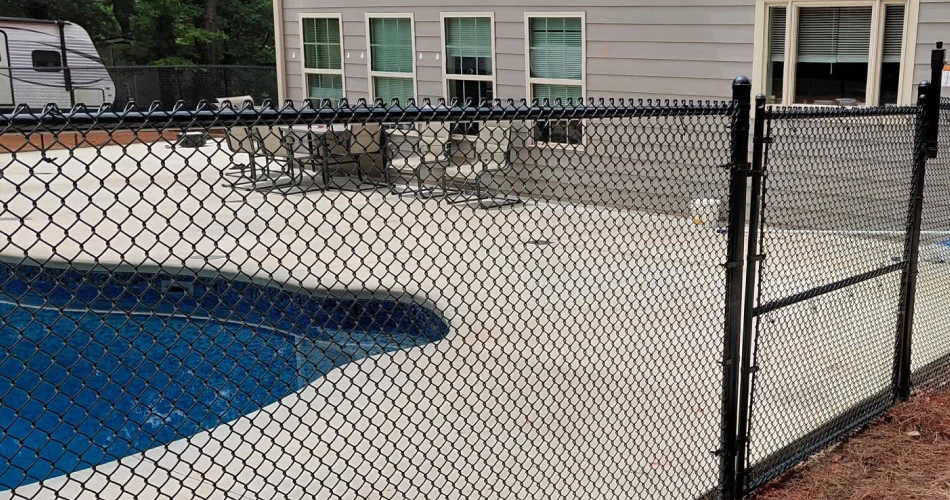
Select Pool Barriers That Fit Your Outdoor Layout
Pool fencing requires more specific planning than a typical decorative yard boundary. The position of the swimming area, nearby doors, existing fences, deck surfaces, and intended access points can all influence the enclosure design. Materials and gate hardware must also be evaluated against applicable pool barrier requirements rather than selected on appearance alone.
As a pool fence installer, we discuss the intended layout and available fencing options while recognizing that regulatory requirements must be verified for each property. A fence material that is appropriate for one application should not automatically be assumed suitable for every swimming area.
Our pool fencing services include:
- Residential Pool Fence Installation: Establish a defined boundary around a residential swimming area using a configuration planned for the property’s layout. We consider nearby patios, walkways, landscaping, and intended access routes while discussing materials and dimensions that must be evaluated against applicable barrier requirements.
- Pool Perimeter Fencing: Create a recognizable separation between the swimming area and surrounding outdoor spaces. Perimeter planning considers the proposed fence route, existing structures, changes in ground elevation, and possible access points so the enclosure can be evaluated as a complete boundary rather than a collection of unrelated sections.
- Decorative Pool Fencing: Explore fencing styles that complement the pool deck, nearby landscaping, and home’s exterior without overlooking barrier requirements. Open metal designs may provide visibility into the swimming area, but panel spacing, height, and other details must be checked for suitability before a specific configuration is selected.
- Pool Fence Replacement: Discuss replacing deteriorated, damaged, or unsuitable fencing around an existing swimming area. Pool fence replacement planning should examine the current layout, supporting posts, gates, and relevant requirements rather than assuming the original design remains appropriate for a new installation.
- Pool Enclosure Fencing: Plan a coordinated fence boundary around the designated pool area with attention to entrances, deck circulation, and maintenance access. Pool enclosure construction involves evaluating how fence sections connect and whether nearby walls, structures, or grade changes affect the proposed barrier.
- Pool Gate Installation: Establish an entrance with dimensions and hardware selected for the pool area’s access needs and applicable regulations. Gate planning includes swing direction, latch location, closing operation, supporting posts, and the relationship between the gate and adjacent fence sections, with required features confirmed before installation.
The appearance of the enclosure also matters because a pool fence often sits close to the home’s most frequently used outdoor spaces. An open design may preserve sightlines between the patio and pool, while a more enclosed configuration may change the sense of space around the deck.
Homeowners considering decorative metal styles can explore our aluminum fence installation services for more information about appearance, maintenance, and available panel configurations.
Plan Pool Access Before Choosing the Fence Style
A pool fencing project should begin with the location of the water, the surrounding outdoor areas, and the applicable barrier requirements. We discuss where people normally approach the pool, how the deck is used, and which access points are necessary for maintenance and everyday activities. Fence height, opening dimensions, ground clearance, gate operation, and hardware placement are important considerations that may be governed by local rules. Property owners should verify current requirements with the appropriate local authority, including any rules affecting existing structures or connections to the proposed enclosure. This information should guide material selection and layout decisions before installation begins.
Pool fencing costs and timelines depend on the enclosure dimensions, material selection, terrain, number of gates, and any existing fence removal or site preparation. A straightforward boundary around an open pool deck may require different planning from an enclosure near retaining walls, landscaping, or several connecting walkways. We explain how the property’s conditions influence the proposed work and discuss available configurations without assuming a particular design satisfies every applicable requirement. For homeowners considering a broader outdoor boundary, our residential fence installation services address yard layouts, while our fence gate installation services explain general gate construction and hardware considerations. When you choose Hamrick Fence for pool fence installation in McDonough, GA, you receive personalized guidance and careful workmanship with attention to the specific planning needs of your swimming area.
Common Questions About Pool Fencing
Swimming pool boundaries require careful attention to access, fence configuration, gate operation, and applicable safety rules. These answers explain important planning considerations before installing or replacing a pool fence.
-
Pool barrier requirements can address fence height, openings, ground clearance, gate operation, latch placement, and other features intended to limit access to the swimming area. The rules that apply may depend on the property’s location, pool type, and surrounding structures. Because requirements can change and differ between jurisdictions, homeowners should confirm the current standards with the appropriate local building or permitting authority before installation. No particular fence design should be assumed compliant without reviewing the applicable requirements.
-
Material suitability depends on the selected design, available products, and applicable pool barrier requirements. Decorative metal fencing may appeal to homeowners who want visibility through the enclosure, while other configurations may offer a different appearance or level of screening. Regardless of material, details such as opening size, height, structural condition, and gate hardware must be evaluated. We help homeowners discuss available fencing options while emphasizing that the final configuration needs to satisfy the requirements that apply to the property.
-
Pool gates may be subject to specific requirements for closing, latching, opening direction, hardware location, and access control. A standard backyard gate that operates conveniently is not necessarily suitable for use in a pool barrier. The supporting posts and adjacent fence sections also need to be considered because poor alignment can affect gate operation. Homeowners should confirm the applicable gate standards before choosing hardware or finalizing an entrance. Regular inspection remains important after installation because hinges and latches can change condition through use.
-
A damaged pool fence should be evaluated promptly, particularly if the problem affects an opening, gate, supporting post, or another part of the barrier. The appropriate response depends on the extent of the damage, the condition of the remaining structure, and whether the existing configuration meets current applicable requirements. Isolated components may sometimes be repairable, but broader replacement may be necessary when the fence is deteriorated or unsuitable. Property owners should also review any requirements that apply when an existing pool barrier is altered or replaced.
-
Pricing depends on the size and shape of the proposed enclosure, selected material, number of gates, terrain, and complexity of the surrounding pool area. A simple layout with one entrance may involve different materials and installation work from a boundary that must navigate landscaping, changes in elevation, or existing structures. Removal of older fencing and additional preparation can also affect the project. Hamrick Fence discusses the proposed scope and pricing factors so homeowners can evaluate available options while accounting for applicable barrier requirements.
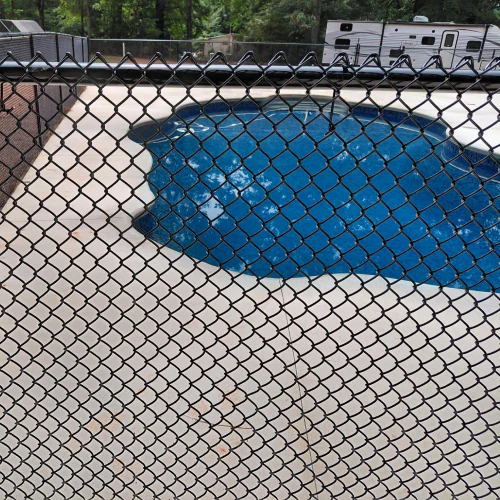
Give Your Pool Area a More Thoughtful Boundary
Plan fencing around your swimming area with attention to access, appearance, and applicable barrier requirements. Discuss your pool layout and material options with our team.